

Potato Chips & Snack Production Lines Delivered Across Africa
If you are sourcing a potato chips production line, french fries processing line, or plantain chips machine for Africa, you need more than a catalog. You need proof that the equipment works in Lagos humidity, survives Cairo grid fluctuations, and passes NAFDAC, KEBS, or SANS audits on the first attempt.
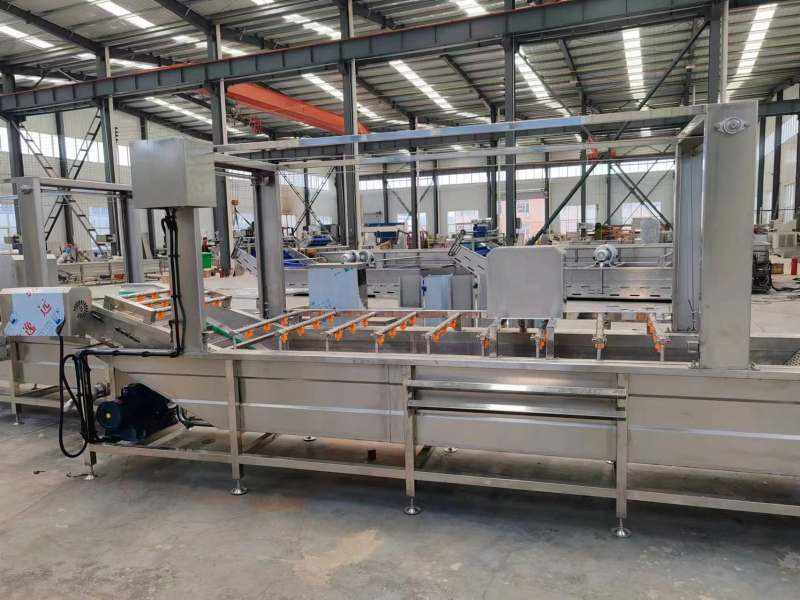
- Kapasitas: 150 kg/h (startup) to 1,000 kg/h (industrial)
- Coverage: 9 African countries
- Installations: 22+ turnkey projects delivered
- Locations: Nairobi to Cairo — East, West, North, and Southern Africa
- Data provided: Real capacity, operating costs, and on-site engineering adaptations
- Purpose: Evaluate proven setups before you request a quote
Why Africa-Specific Engineering Matters
Too many suppliers ship a standard line and hope for the best. We learned the hard way — on factory floors in Lagos, Accra, and Dar es Salaam — that African conditions demand African solutions.
Here are the five technical realities we engineer for on every project:
1. Voltage Instability & Grid Fluctuations From Lagos to Nairobi, industrial grids drop without warning. We install industrial AVR (Automatic Voltage Regulator) units and soft-start modules as standard. In our Lagos cassava project, post-blackout restart time dropped from nine minutes to ninety seconds, preventing fryer temperature loss.
2. Coastal Corrosion & Humidity Lagos coastal air destroys 201-grade stainless steel within months. For all coastal and high-humidity installations — including Apapa, Lagos and Tema, Ghana — we specify 316L stainless steel contact surfaces with molybdenum addition. After eighteen months of operation in Lagos, zero pitting was observed on fryer contact surfaces.
3. Diesel Generator Compatibility In Nigeria, NEPA grid supply is available roughly twelve to fourteen hours daily. Our lines are calibrated for seamless switchover to 60kVA diesel generator sets. In Kosofe, Lagos, we integrated a generator-compatible power panel that maintains PLC stability during switchover.
4. Tropical Raw Material Variability African potatoes, plantains, and cassava are not uniform.
- Shangi potatoes (Kenya) average 17–20% starch and require adjusted blanching times.
- Mondial potatoes (South Africa, Morocco, Algeria) average 18% starch and need specific slicer blade gaps.
- Plantain ripeness varies from deep green to black-speckled yellow within the same delivery. We program three distinct fryer temperature curves: 185°C for unripe, 175°C for semi-ripe, and 165°C for ripe, with proportional belt speed adjustment.
- Cassava cyanide content is unpredictable. We supply handheld cyanide test kits and variable soaking protocols (12–48 hours) as part of the workflow.
5. Low-Literacy Operator Interfaces In Lagos, we replaced text-based HMI menus with icon-driven navigation and color-coded sorting bins (green/yellow/red) matching the fryer recipe buttons. Operator training duration dropped from three weeks to five days.
Engineer Field Note:“Adapting the line for Shangi potatoes with 18% starch required us to reduce blanching time by 30 seconds and increase centrifugal dewatering speed. This improved crispness and kept oil absorption under 28%.” — JN, Nairobi Commissioning, March 2024
Snack Production Lines by Country
West Africa
Nigeria — 6 Installations Nigeria remains our most active African market. Every line is engineered for NAFDAC and Halal compliance.
| Project | City | Kapasitas | Product | Certifications | Year |
|---|---|---|---|---|---|
| Plantain Chips Line | Lagos (Kosofe) | 300 kg/h | Plantain | NAFDAC | 2024 |
| Cassava Chips Line | Lagos (Apapa) | 300 kg/h | Cassava | SONCAP | 2023 |
| Semi-Auto Potato Chips | Lagos | 200 kg/h | Potato | NAFDAC + Halal | 2024 |
| Banana Chips Plant | Lagos | 500 kg/h | Banana | NAFDAC + Halal | 2024 |
| Startup SME Line | Lagos | 150 kg/h | Potato | NAFDAC + Halal | 2024 |
| Potato Crisps Machine | Kenya-bound | 500 kg/h | Potato | — | 2024 |
Key Nigerian Insight: Charcoal-to-gas conversion is a major trend. Our Lagos plantain client moved from three charcoal-fired kettle fryers under tarpaulin to a PLC-controlled automatic line, achieving 98% capacity utilization by month three.
Ghana — 2 Installations
- 500 kg/h Plantain Chips (Accra, GSA + Halal, 2023) — Oil absorption reduced to 24%
- 1,000 kg/h Cassava Chips (Accra, GSA + Halal, 2024) — Full automatic line with 82% finished yield
North Africa
Egypt — 6 Installations Egyptian projects emphasize ISO 22000, Halal, and high-throughput automation for premium retail.
| Project | City | Kapasitas | Product | Certifications | Year |
|---|---|---|---|---|---|
| Industrial Potato Chips | Cairo | 1,000 kg/h | Potato | ISO 22000 + Halal | 2023 |
| Frozen French Fries | Cairo | 1,000 kg/h | French Fries | ISO 22000 + Halal + CE | 2023 |
| Fresh Potato Chips | Cairo | 1,000 kg/h | Potato | ISO 22000 + Halal | 2024 |
| Compound Chips | Alexandria | 500 kg/h | Compound | EOS + Halal + CE | 2024 |
| Turnkey Auto Plant | Cairo | 1,000 kg/h | Potato | ISO 22000 + Halal + CE | 2023 |
Key Egyptian Insight: Spunta potatoes (19% starch) dominate the Egyptian market. We calibrated slicer thickness to 1.5–1.6 mm and blanching to 75–85°C to control browning and achieve oil absorption rates between 26% and 32%.
Morocco — 2 Installations
- 500 kg/h Fresh Potato Chips (Casablanca, ISO 22000 + Halal + CE, 2023)
- 200 kg/h Compound Chips (Casablanca, ONSSA + Halal + CE, 2023)
Algeria — 1 Installation
- 200 kg/h Potato Chips (Oran, CE + Halal + HACCP, 2023) — Compact 135 m² footprint for urban industrial plots.
East Africa
Kenya — 3 Installations
- 150 kg/h Fresh Potato Chips (Nairobi, KEBS + Halal, 2024) — Compact 115 m² layout, 17-month payback
- 500 kg/h Banana Chips (Nairobi, KEBS + Halal, 2023) — Oil absorption 23.8%
- 500 kg/h Potato Crisps (Kenya) — Second machine delivered; local branch planned
Tanzania — 1 Installation
- 1,000 kg/h Cassava Chips (Dar es Salaam, KEBS + Halal, 2024) — Mondial cassava adapted with 1.4 mm slice thickness and 85°C blanching
Uganda — 1 Installation
- 500 kg/h Plantain Chips (Kampala, UNBS + Halal, 2023) — Mbidde and Gonja varieties calibrated at 1.8 mm slice thickness
Southern Africa
South Africa — 2 Installations
- 300 kg/h Fresh Potato Chips (Cape Town, SANS 885 + Halal, 2023) — Mondial potato optimized for 180°C frying
- 1,000 kg/h French Fries (Johannesburg, SABS + SANS 10049 + Halal, 2023) — 24% oil absorption, 14-month payback
What Can We Help You Produce?
1. Fresh Potato Chips — 10+ Lines Across Africa
Our most requested product. Lines range from 150 kg/h startup units in Nairobi to 1,000 kg/h industrial plants in Cairo.
Typical Configuration:
- Brush roller washer-peeler
- Centrifugal slicer (1.2–2.0 mm adjustable)
- Continuous blancher (75–85°C)
- Centrifugal dewaterer
- Continuous fryer (175–180°C)
- De-oiling conveyor + cooling tunnel
- Seasoning drum + metal detector
- VFFS packing machine
Certification Ready: NAFDAC, KEBS, SANS 885, ISO 22000, Halal
2. Frozen French Fries — 2 Industrial Lines
- 1,000 kg/h Smart IoT-Enabled Line (Cairo) — Oil absorption 18.2%, 7-month project duration
- 1,000 kg/h Fully-Automatic Line (Johannesburg) — SANS 10049 HACCP compliant, 25 packs per minute
Key Difference: French fries lines include extended blanching (5 minutes at 75°C), multi-stage washing, and IQF freezing modules.
3. Plantain Chips — 4 Lines in West & East Africa
Plantain processing omits blanching but requires pre-wash for field sand and ripeness-based fryer curves.
Critical Adaptation: Our Lagos plantain line uses a three-bin color-coded sorting platform (green/yellow/red) and a three-zone PID fryer (185°C / 175°C / 165°C) to handle ripeness variation.
4. Cassava Chips — 3 Lines with Cyanide Safety Protocol
Cassava lines require a soaking pool (12–48 hours) for cyanogenic glucoside reduction.
Safety Feature: Every incoming batch is spot-tested. Above 20 mg/kg cyanide triggers 36-hour soaking with two water changes. A laminated flow chart is bolted to the soaking pool wall. See our Lagos cassava project for full protocols.
5. Banana Chips — 2 Lines (Nigeria & Kenya)
Banana chips require latex removal and lower frying temperatures (170°C) to prevent caramelization. See our Lagos banana project.
6. Compound Potato Chips — 2 Lines (Egypt & Morocco)
Compound chips use restructured potato dough and require precise thickness control (1.2–1.4 mm) for uniform frying. See our Alexandria compound line.
Find the Right Scale for Your Operation
| Scale | Kapasitas | Typical Investment | Floor Space | Operators/Shift | Best For | African Examples |
|---|---|---|---|---|---|---|
| Startup / SME | 150–200 kg/h | $62K – $240K | 72–190 m² | 2–4 | First factory, urban SME, supermarket supply | Lagos (Nigeria), Nairobi (Kenya), Oran (Algeria), Casablanca (Morocco) |
| Mid-Scale | 300–500 kg/h | $210K – $410K | 180–430 m² | 4–8 | Regional distribution, multiple SKUs, export | Lagos (Nigeria), Accra (Ghana), Cape Town (SA), Kampala (Uganda) |
| Industrial | 1,000 kg/h | $480K – $820K | 360–650 m² | 8–10 | National retail, QSR supply, high-volume export | Cairo (Egypt), Accra (Ghana), Johannesburg (SA), Dar es Salaam (Tanzania) |
Payback Periods by Region:
- Nigeria: 10–13.5 months (high retail margins, low raw material cost)
- Egypt: 14–19 months (large market, premium pricing)
- Kenya: 14–17 months (stable urban demand)
- South Africa: 14 months (mature retail channels)
- Ghana: 18 months (growing export potential)
- Tanzania: 13.5 months (high capacity utilization)
Certification & Compliance Roadmap: First-Attempt Pass, Every Time
We engineer compliance into the equipment, not as an afterthought. Here is how we handle the major African certification frameworks:
Nigeria: NAFDAC + SONCAP + Halal
- NAFDAC requires HACCP zoning, documented batch records, and water-source testing.
- SONCAP (Standards Organisation of Nigeria) mandates pre-shipment conformity assessment.
- Kami menyediakan 304 stainless steel contact surfaces, segregated raw/finished zones, and Halal-certified lubricants.
Kenya: KEBS + Halal
- KEBS KS EAS 39 and KS 1649 for fried snacks.
- We prepare traceability documentation and support inspector walkthroughs.
South Africa: SANS 885 / SANS 10049 + Halal
- SANS 885:2011 for food hygiene.
- SANS 10049 (HACCP) requires CCP mapping and automated batch records.
- Our PLC system generates cleaning validation reports for auditors.
Ghana: GSA + Halal
- GS 759:2013 for fried snack foods.
- Metal detectors meet GSA sensitivity standards.
Egypt: ISO 22000 + EOS + Halal
- ISO 22000:2018 food safety management system.
- EOS (Egyptian Organization for Standardization) food contact material standards.
- Full Codex Alimentarius documentation and CCP validation.
Morocco: ONSSA + ISO 22000 + Halal
- Arrêté 2011-132 food safety compliance.
- HEPA-filtered air curtains in seasoning and packing sections.
Algeria: INAQ + CE + Halal
- INAQ (Institut National de la Normalisation et de la Qualité) Halal standards.
- CE-marked PLCs for machinery safety.
Uganda: UNBS + Halal
- US EAS 39:2019 for processed plantain chips.
- Color-coded utensil segregation and full traceability dossiers.
Tanzania: KEBS + Halal
- KS EAS 39:2012 compliance.
- Islamic Foundation of Tanzania Halal guidelines.
Universal Equipment Features for Compliance:
- 304/316L stainless steel all product contact surfaces
- CE-marked PLC controllers with traceability logging
- Color-coded production zones for Halal segregation
- Metal detection (0.8 mm Fe sensitivity)
- Automated CIP (Clean-in-Place) modules
- Halal-certified lubricants and cleaning agents
Real ROI & Operating Economics in Africa
The table below uses actual project data to show what it costs to run these lines on the ground.
| Country | Kapasitas | Equipment CAPEX | Shipping + Install | Raw Material/kg | Energy/Shift | Labor/Month | Gross Margin | Payback |
|---|---|---|---|---|---|---|---|---|
| Nigeria | 150 kg/h | $62K | $8.5K | $0.18 (Shangi) | $42 (elec+gas) | $210 | 68% | 13 months |
| Nigeria | 500 kg/h | $410K | $37K | $0.28 (banana) | $126 | $450 | 56% | 13.5 months |
| Egypt | 1,000 kg/h | $540K | $48K | $0.26 (Spunta) | $375 | $7,000 | 58% | 14 months |
| Egypt | 1,000 kg/h | $820K | $55K | $0.21 (Spunta) | $230 | $4,080 | 62% | 19 months |
| Kenya | 150 kg/h | $108K | $13.5K | $0.21 (Shangi) | $112 | $450 | 63% | 17 months |
| Kenya | 500 kg/h | $238K | $21.5K | $0.26 (banana) | $167 | $280 | 50% | 14.5 months |
| South Africa | 300 kg/h | $210K | $15K | $0.28 (Mondial) | $206 | $1,000 | 63% | 14 months |
| South Africa | 1,000 kg/h | $650K | $38K | $0.18 (Mondial) | $361 | $980 | 67% | 14 months |
| Ghana | 500 kg/h | $385K | $36K | $0.31 (plantain) | $196 | $410 | 54% | 18 months |
| Ghana | 1,000 kg/h | $390K | $44K | $0.16 (cassava) | $272 | $310 | 52% | 18 months |
| Tanzania | 1,000 kg/h | $480K | $39K | $0.16 (cassava) | $295 | $350 | 57% | 13.5 months |
| Uganda | 500 kg/h | $185K | $22.5K | $0.32 (plantain) | $228 | $290 | 49% | 14–16 months |
| Morocco | 500 kg/h | $410K | $28K | $0.18 (Mondial) | $140 | $480 | 54% | 14 months |
| Algeria | 200 kg/h | $240K | $14.5K | $0.22 (Mondial) | $64 | $390 | 62% | 17 months |
Notes on Operating Costs:
- Electricity: Ranges from $0.09/kWh (Egypt) to $0.12/kWh (most of Sub-Saharan Africa)
- Gas: LPG in West Africa runs $0.65–$1.20/m³; natural gas in North Africa is cheaper ($0.13–$0.35/m³)
- Labor: Nigeria and East Africa average $200–$450/month per operator; South Africa and North Africa run higher ($480–$1,000/month)
- Packaging: Budget $0.07–$0.13/kg depending on nitrogen flushing and film quality
Engineering Solutions We Learned on African Factory Floors
These are not marketing claims. These are adaptations born from solving real problems during commissioning.
1. Coastal Corrosion Protection In Apapa, Lagos, standard 201 stainless steel shelving pitting within four months. We now specify 316L stainless steel (12% nickel, 2% molybdenum) for all food-contact surfaces in coastal zones. The main electrical cabinet is sealed to IP65.
2. Power Stabilization for Unreliable Grids In Lagos, NEPA grid + generator switchover caused voltage drops to 330V. We integrated an AVR and soft-start module into the main panel. Post-blackout restart now takes 80–90 seconds, and oil temperature recovery takes 4 minutes.
3. Variable Plantain Ripeness Protocol A fixed fry temperature cannot handle mixed-ripeness plantain deliveries. Our Lagos plantain line uses PLC-programmed three-zone frying with HMI recipe selection matching the color-coded sorting bins. This eliminated the caramelization and bitterness we saw in early trials.
4. Cassava Cyanide Safety Workflow Never rely on a supplier’s claim of “sweet cassava.” We supply a ₦25,000 portable cyanide test kit and a laminated soaking protocol chart. Batches testing above 20 mg/kg receive 36-hour soaking with two water changes.
5. Sloped Drainage for High-Humidity Wash-Down Lagos humidity peaks at 92% during April rains. Flat-bottom tanks breed biofilm within 48 hours. Our soaking pools and wash-down floors are built with a 5-degree continuous slope to full-bore drain valves.
6. Operator Interface for Low-Literacy Workforces In Kosofe, Lagos, we converted the HMI from text menus to icon-driven navigation. Temperature recipe buttons match the green-yellow-red sorting bin colors. A fifty-year-old former charcoal fryer operator achieved independent recipe switching by day five.
Engineer Field Note:“For long-term operation in Ghana’s tropical climate, I recommend monthly checks of the oil filtration system and humidity control in the seasoning area. Consistent humidity above 60% can affect chip crispness — dehumidification pays off during the rainy season.” — JY, Accra Commissioning, May 2023
Hear From African Plant Managers
Nigeria — Lagos Plantain Chips
“Before, we fry with charcoal at Mile 12 under umbrella. Now the gas fryer give same color every batch. NAFDAC man came last month. He said the stainless wall look proper.” — Production Supervisor, Lagos facility
Egypt — Cairo Potato Chips
“With the new fully-automatic line, we have achieved stable 1,000 kg per hour throughput and consistent oil absorption rates of 26 to 27 percent. Our first ISO 22000 and Halal audits passed without a single corrective action.” — Omar, Plant Manager, Cairo
Kenya — Nairobi Potato Chips
“Since commissioning the new line, we have achieved stable throughput at 150 kg per hour and maintained oil absorption consistently below 28 percent. The quality of our chips has improved dramatically.” — David, Production Manager, Nairobi
South Africa — Johannesburg French Fries
“Since commissioning the new line, our throughput has increased by more than 60 percent, and we consistently achieve oil absorption rates below 25 percent. We now have full traceability and can confidently meet both SABS and Halal requirements.” — Thabo, Plant Manager, Johannesburg
Ghana — Accra Plantain Chips
“The new 500 kg per hour line has transformed our production. We now achieve stable throughput with every shift and our plantain chips consistently meet the 24 percent oil absorption target. GSA and Halal audits passed with zero findings.” — Emmanuel, Operations Manager, Accra
Uganda — Kampala Plantain Chips
“Since commissioning the Asia Snack Machinery line, our plantain chips output has stabilized at over 500 kg per hour with minimal downtime. Certification for both Halal and UNBS was achieved in a single audit.” — Samuel, Production Manager, Kampala
Frequently Asked Questions by African Buyers
- Nigeria: NAFDAC factory registration + SONCAP for import + Halal (if targeting Muslim consumers)
- Kenya: KEBS (KS EAS 39 or KS 1649) + Halal
- Ghana: GSA (GS 759) + Halal We provide full documentation and on-site audit support for all three.
We provide full documentation and on-site audit support for all three.
We install industrial AVR units, surge protectors, and soft-start modules as standard. In Egypt and Nigeria, we also add step-up transformers to handle grid dropouts. Our PLC systems are recalibrated to handle ±10% voltage variance.
Yes. We maintain a parameter database for African varieties:
- Shangi (Kenya/Nigeria): 17–20% starch, 1.5 mm slice, 85°C blanch
- Mondial (South Africa/Ghana/Morocco): 18% starch, 1.2–1.5 mm slice, 75–85°C blanch
- Spunta (Egypt): 19% starch, 1.5–1.6 mm slice, 75°C blanch, 3-minute dwell time
- Manufacturing: 70–120 days depending on capacity
- Shipping: 21–38 days by sea (Qingdao to Port Said is fastest at 19–21 days; Lagos and Mombasa average 28–36 days)
- Customs + inland: 5–14 days
- Total project delivery: 4.5–6 months from order to commissioning
Yes. We maintain spare parts stock in Lagos, Nairobi, Cairo, and Accra. Critical spares ship within 24–72 hours. Remote PLC diagnostics are available 24/7. We are also preparing a Kenya branch for faster regional coverage.
We specialize in informal-to-formal transitions. Our Lagos plantain project moved a client from charcoal kettle fryers to a fully automatic line. We provide:
- Physical workflow redesign (sorting platforms, HMI training)
- Operator training (from 3 weeks down to 5 days with icon-based interfaces)
- NAFDAC/Halal documentation support
Based on actual projects:
- Nigeria: 10–13.5 months at 70–90% utilization
- Ghana: ~18 months at 70% utilization
- Raw material costs are low ($0.16–$0.31/kg), and retail prices are strong ($1.05–$1.32/kg), creating gross margins of 50–68%.
Partially. The fryer, seasoning, and packing sections are multi-product. However, cassava requires a soaking pool for cyanide reduction that potatoes and plantains do not. Plantain requires a pre-wash and ripeness sorting system that potatoes do not. We can design a flexible line, but we recommend dedicated lines for cassava if it is your primary product. See our Lagos cassava line for the full workflow.
- All food-contact surfaces are 304/316L stainless steel
- All lubricants and cleaning agents are Halal-certified
- We implement physically segregated zones with color-coded tools and utensils
- The PLC logs every cleaning event and batch switchover for audit traceability
- We provide on-site support during the first Halal audit
- Floor space: 360–650 m² depending on layout (linear vs. U-shaped)
- Power: 145–260 kW installed, 380V/230V 50Hz 3-phase
- Water: 1.8–4.0 m³/h depending on washing/blanching intensity
- Gas: 28–65 m³/h for fryer heating
Ready to Upgrade Your African Snack Operation?
Whether you are a first-generation entrepreneur in Lagos looking for a 150 kg/h semi-automatic startup line, or an established processor in Cairo scaling to 1,000 kg/h industrial automation, we have a proven African installation that matches your situation.
Next Steps:
- Request a Free Africa-Specific Consultation — Tell us your country, product, and target capacity. We will match you to the closest case study and provide a custom ROI projection.
- Download the Africa Project Portfolio — A PDF summary of all 22+ projects with technical specs, certification details, and customer contacts (where permitted).
Our Commitment to Africa:
- 15+ years of field experience on African factory floors
- 100% first-attempt certification rate for NAFDAC, KEBS, SANS, GSA, ISO 22000, and Halal
- 24–48 hour spare parts delivery across major African hubs
- Local agents in Lagos, Nairobi, Cairo, and Accra
Get your quote today. We do not just export machines to Africa — we engineer them for Africa.
How We Deliver, Install, and Support Lines in Asia
On-Site Commissioning by Our Engineers
Every Asian project includes 4–6 weeks of on-site commissioning by our own mechanical and electrical engineers. We do not subcontract to local third-party installers. In India, Indonesia, and Vietnam, our teams have completed cold-start-to-commercial-production handovers with zero rework.
Language and Documentation Localization
HMI interfaces are delivered in English as standard. For Indonesia, we provide Bahasa-language screen overlays. For Central Asia, Russian-language SOPs and training manuals are available. All electrical schematics use IEC symbology, not NEMA.
Spare Parts and Remote Diagnostics
Critical wear parts — cutting blades, nylon brush rollers, conveyor belts, filter paper, and pneumatic seals — are pre-positioned in our Southeast Asian spare-parts hub. Delivery to Jakarta, Bangkok, or Ho Chi Minh City takes 7–10 days, not 4–6 weeks from China. For PLC-related faults, we perform remote diagnostics via secure VPN tunnel into the SCADA layer, resolving 60–70% of software issues without a site visit.
Post-Commissioning Audit Support
We prepare every Asian client for third-party audits. Our documentation pack includes HACCP flow diagrams, ISO 22000 prerequisite programs, BRCGS Issue 9 gap-analysis templates, and EU Regulation 2017/2158 acrylamide monitoring SOPs. Clients in Pakistan and Malaysia have passed Halal and retail audits on first attempt using our pre-prepared dossiers.
What Asian Manufacturers Say
“The 500 kg/h line in Pune paid back in 14 months. The critical factor was not the equipment price — it was the pre-shipment raw-material spec packet they sent us. We knew exactly what potato dry matter and reducing sugar to target before the containers even arrived.”
— Plant Director, Western India Snack Brand (500 kg/h fully automatic potato chips line)
“We had failed with two previous European suppliers in Jakarta because of humidity corrosion. Their IP65 cabinet and stainless-steel frame specification solved the control-panel rust issue permanently. OEE is now 78%.”
— Operations Manager, Indonesian Cassava Processor (500 kg/h cassava line)
“The Halal documentation from their engineering team was the most detailed we have received from any Chinese supplier. Our JAKIM audit passed with zero non-conformities.”
— QA Manager, Kuala Lumpur Snack Exporter (500 kg/h Halal potato chips line)
Frequently Asked Questions About Snack Production Lines in Asia
100 kg/h finished output is the practical floor for a frozen or fresh potato chip plant in Bangladesh or Nepal. Below this, fixed costs — refrigeration, packaging, QC lab, and Halal certification — do not amortize favorably. Our Bangladesh 100 kg/h plant and Nepal 150 kg/h line both validated this threshold with 14–18 month payback.
Yes. We have commissioned cassava lines in Indonesia, banana lines in South India, and plantain lines in the Philippines. The key adaptations are in the peeling section (brush roller geometry), cutting module (interchangeable heads), and frying temperature profile. Changeover between potato and cassava takes 30–45 minutes on our dual-product lines.
Yes. Halal compliance is standard scope for markets requiring it. We provide dedicated oil circuits with no cross-contamination risk, stainless-steel contact surfaces, and Halal-compliant lubricants. Our lines in Karachi, Kuala Lumpur, and Bangladesh have passed JAKIM, MUI, and GCC Halal audits.
Manufacturing takes 10–14 weeks. Sea freight to Jakarta, Bangkok, or Ho Chi Minh City is 10–14 days. On-site installation, commissioning, and training require 4–6 weeks. Total contract-to-commercial-production timeline is 20–26 weeks for Southeast Asia.
Standard configuration is 380V/50Hz, 3-phase + N + PE. For India, we support 415V/50Hz. For Bangladesh, Pakistan, and rural Southeast Asia with unstable grids, we integrate AVR and soft-start modules as standard. All motors are IEC-frame, not NEMA.
At 300 kg/h x 12 hr/day x 300 days, a line produces ~1,080 tonnes of finished chips per year. At wholesale prices of USD 1.10–1.40/kg (varies by country and format), annual revenue lands at USD 1.2–1.5M. With correct sizing and locked-in raw-material supply, EBITDA margins run 20–26%, and equipment payback is typically 18–28 months in Asian markets.
Delivery Potato Chips Production Line In Africa


 Indonesian
  English
  Spanish
  French
  Arabic
  Russian
  Portuguese
  German
  Italian
  Malay
Malay  Uzbek
Uzbek