

Real Potato Chips Factory Installations Across Asia, Africa, Europe, Latin America, and the Middle East
Investing in a potato chips production line is a capital decision that spans 10–15 years. Before choosing a supplier, technical buyers and plant managers need verifiable evidence: Has this manufacturer actually commissioned lines in my region? Do they understand local raw materials, electrical standards, and regulatory frameworks? Can they deliver turnkey — not just equipment?
This page answers those questions with data. We have commissioned 100+ snack production lines across 5 continents and 22+ countries, ranging from 100 kg/h semi-automatic starter plants to 2,000 kg/h industrial export facilities. Every project includes on-site commissioning by our own engineers, not third-party subcontractors.
Whether you are evaluating a 100 kg/h entry plant for a local QSR or a 1,000 kg/h automated facility for national retail distribution, these global projects provide capacity benchmarks, CapEx reference points, and engineering validation you can verify.
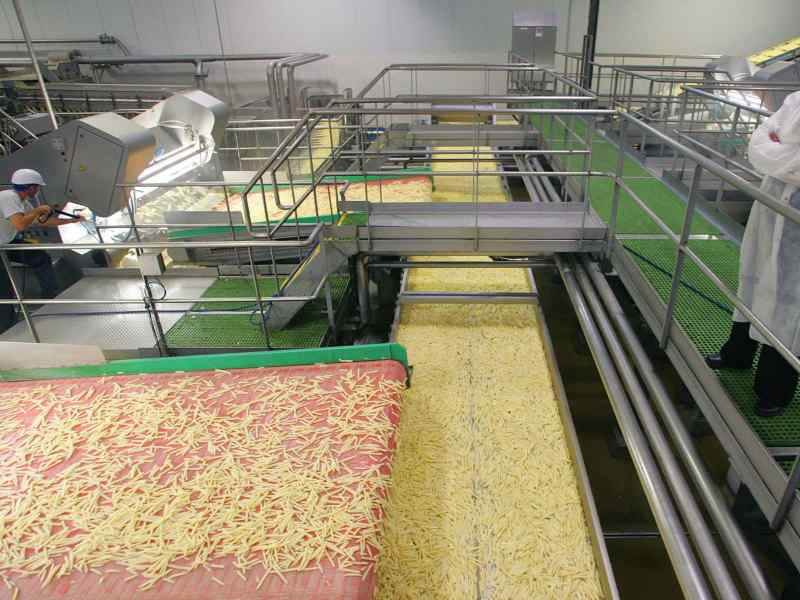
Why Project Geography Matters for Equipment Selection
A potato chips line engineered for Frankfurt will fail in Lagos or Jakarta without adaptation. After 15 years of field commissioning, we have identified five non-negotiable variables that determine whether a line achieves 82% OEE or sits idle waiting for spare parts.
1. Climate & Humidity
Southeast Asia operates at 75–90% relative humidity. Standard IP54 electrical cabinets corrode within 18 months. Our Asian-spec lines use IP65 enclosures and upsized oil cooling loops by 15–20% to handle wet-bulb temperatures.
2. Raw Material Variability
- South Asia: Local potatoes, dry matter 18–22%
- Southeast Asia: Cassava, banana, plantain dominant
- Central Asia: Compound chips (Pringles-type) preferred
- Africa: Import-dependent potato markets, high sand content in cassava
- Middle East: Halal compliance mandatory
3. Electrical Standards
| Region | Voltage | Special Requirement |
|---|---|---|
| South Asia | 380–415V/50Hz | AVR for grid instability (Bangladesh, Pakistan) |
| Southeast Asia | 380V/50Hz | 340V-tolerant transformers for rural plants |
| Europe | 400V/50Hz | CE marking, energy efficiency compliance |
| Africa | 380–415V/50Hz | Diesel/LPG backup fuel flexibility |
| Middle East | 380V/50Hz | Halal material certification |
4. Certification Stack
- Asia: FSSAI (India), BPOM (Indonesia), JAKIM (Malaysia), Halal
- Africa: Local health authority + HACCP baseline
- Europe: CE, BRCGS Issue 9, IFS Food
- Middle East: GCC Halal, SASO (Saudi)
- Global: HACCP, ISO 22000, FDA 21 CFR 117 (US export)
5. Logistics & Landed Cost
Sea freight adds 15–25% above EXW equipment price. Central Asia requires 18–25 day rail/road transit with shock-mount packaging. We calculate true landed cost including freight, insurance, THC, and customs clearance — not just equipment price.
How Our Lines Compare to Typical Market Offerings
Most buyers evaluate 3–5 suppliers before decision. After 15 years of field service, we have identified the specification gaps that cause hidden costs in years 2–5.
| Dimension | Typical Chinese Export Line | Our Specification | What It Means for Your OpEx |
|---|---|---|---|
| Electrical enclosure | IP54 standard | IP65 with stainless-steel frame | No corrosion replacement in humid climates (Southeast Asia, Latin America) |
| Oil cooling | Standard tube cooler | Vertical tube oil cooler + post-shift rapid chill | Oil life extended from 3–4 days to 12–15 days; saves USD 180k–240k/year on 1,000 kg/h line |
| Filtration | Single coarse screen | Dual-redundant coarse filter + inline fine filter (80 L/min, 0.3–0.37 MPa) | TPM held at 12–16% for 12–15 days vs. industry average 3–4 days |
| Heat exchanger | Single-fuel (natural gas only) | Multi-fuel (natural gas/LPG/diesel/heavy oil/methanol) without hardware modification | Fuel flexibility for unreliable gas markets (Africa, South Asia, Middle East) |
| Blanching | Single-stage electric | Two-stage steam-heated with inline SAPP dosing | 12-month shelf life without color drift; acrylamide below EU 500 microgram/kg |
| Cutting | Fixed mechanical blade | Hydro-cutter with interchangeable heads (6×6/9×9/crinkle/wedge/shoestring) | Format changeover in 30–45 minutes without re-engineering |
| IQF freezing | Compact cabinet (static) | Fluidized-bed tunnel with variable-pitch evaporator | Defrost intervals from 6–8 hours to 18–24 hours; lower refrigeration OpEx |
| Control system | Relay + local switches | Centralized PLC + SCADA with remote VPN diagnostics | 60–70% of software faults resolved without site visit |
The Bottom Line: Suppliers quoting 20–30% lower EXW prices often omit these specifications. The “savings” are consumed by oil replacement, corrosion downtime, and manual labor within 18 months.
Projects by Region
Africa: 10 Countries | 20+ Projects
Typical Capacity: 100–300 kg/h
Dominant Products: Potato chips, plantain chips, cassava chips
Key Engineering Challenge: Diesel fuel flexibility, voltage stability, import-dependent raw material supply chains
Featured Project:
Nigeria — 300 kg/h Potato Chips Factory
Designed for growing snack brand reducing import dependence. Full 14-stage line with local-operator training in English.
Europe: 6 Countries | 10+ Projects
Typical Capacity: 300–2,000 kg/h
Dominant Products: Potato chips, compound chips, frozen French fries
Key Engineering Challenge: Energy efficiency, BRCGS/IFS audit compliance, high automation (SCADA), cold-climate insulation
Featured Project:
Russia — 2,000 kg/h Industrial Potato Chips Plant, Moscow
EAC TR CU 021/2011 compliant. Fluidized-bed IQF with variable-pitch evaporator for 18–24 hour defrost intervals.
Latin America: 6 Countries | 12+ Projects
Typical Capacity: 200–1,000 kg/h
Dominant Products: Potato chips, sweet potato chips, tortilla chips, compound chips
Key Engineering Challenge: High-altitude calibration (Mexico City, Bogota), tropical humidity, local seasoning preferences
Featured Project:
Brazil — 500 kg/h Fresh Potato Chips Line, Sao Paulo
Fully automatic with dual-cutting-head changeover for 6×6/9×9/crinkle formats. Commissioned with 78% OEE.
Middle East: 5 Countries | 15+ Projects
Typical Capacity: 200–1,000 kg/h
Dominant Products: Halal potato chips, compound chips, French fries
Key Engineering Challenge: GCC Halal compliance, multi-fuel flexibility (subsidized gas vs. diesel backup), extreme heat (50°C+ ambient)
Featured Project:
Saudi Arabia — 500 kg/h Fully Automatic Halal Chips Plant, Riyadh
JAKIM-equivalent Halal SOP. Dedicated oil circuit with no cross-contamination. Audit-ready for GCC export.
Asia: 14 Countries | 35+ Projects
Typical Capacity: 100–1,000 kg/h
Dominant Products: Potato chips, cassava chips, banana chips, compound chips, French fries
Key Engineering Challenge: Humidity adaptation, Halal compliance, multi-fuel heat exchangers
Featured Project:
India — 500 kg/h Fully Automatic Potato Chips Line
Commissioned with 22% EBITDA margin within 14 months. Multi-fuel heat exchanger (natural gas/LPG/diesel) for grid-unreliable region.
Which Production Line Matches Your Raw Material?
Not all tubers and fruits process the same way. Starch gelatinization temperature, sugar content, fiber structure, and moisture profile determine equipment selection.
| Raw Material | Typical Dry Matter | Key Processing Challenge | Recommended Line Configuration | Featured Project |
|---|---|---|---|---|
| Potato (local table stock) | 18–22% | Reducing sugar >0.4% causes Maillard browning | Two-stage blanch (90°C/60°C), inline SAPP dosing, optical color sorting | [India 500 kg/h →] |
| Potato (high-starch processing variety) | 22–25% | Low reducing sugar but high starch causes oil pickup spikes | Precise frying temp control (175–180°C), de-oiling air-knife + vibratory | [Russia 2,000 kg/h →] |
| Cassava | 30–35% | High sand content damages peelers; cyanogenic compounds require washing | Sand-resistant brush peeler, extended washing stage, modified slicing angle | [Indonesia 500 kg/h →] |
| Banana (Nendran/Saba) | 20–25% | High sugar (15–20%) causes caramelization burn at standard frying temps | Variable frying profile (160–175°C), vacuum frying option (90–105°C) | [Philippines 200 kg/h →] |
| Plantain | 25–30% | Curved geometry complicates peeling; firm texture requires sharper blades | Calibrated brush peeler with adjustable roller spacing, carbide-tipped cutting knives | [Nigeria 200 kg/h →] |
| Compound (potato flour + starch) | N/A (dry mix) | Sheeting thickness consistency, rotary mold wear, seasoning adhesion | Sheeting line (0.8–1.2 mm die), rotary molding, seasoning drum (8–12 rpm, 3–5% ratio) | [Kazakhstan 500 kg/h →] |
Capacity & Investment Benchmarks (Global Reference)
| Tier | Capacity | Typical Buyer | CapEx EXW | Footprint | Crew | Best Fit Region |
|---|---|---|---|---|---|---|
| Small | 100–200 kg/h | Startup, local QSR | USD 110k–280k | 200–400 m² | 6–8 | Africa, South Asia, Southeast Asia |
| Mid-Range | 300–500 kg/h | Regional brand | USD 350k–750k | 600–1,000 m² | 8–12 | Southeast Asia, Latin America, Middle East |
| Industrial | 500–1,000 kg/h | National brand | USD 800k–1.5M | 1,200–2,000 m² | 15–20 | India, Russia, Brazil, Saudi Arabia |
| Large Export | 1,000–2,000 kg/h | Export-oriented | USD 1.5M–3M+ | 2,000–3,000 m² | 20–40 | Europe, Russia, Middle East |
Raw-to-Finished Yield: 48–52% for fresh-cut potato chips.
Important: Always confirm whether quoted capacity is raw input or finished output.
How We Deliver Globally
On-Site Commissioning (Not Subcontracted)
Every project includes 4–6 weeks of on-site commissioning by our own mechanical and electrical engineers. We have completed cold-start-to-commercial-production handovers in India, Indonesia, Vietnam, Nigeria, Egypt, Russia, Brazil, and Saudi Arabia with zero rework.
Spare Parts Network
Critical wear parts — cutting blades, brush rollers, conveyor belts, filter paper — are pre-positioned in Southeast Asian and Middle Eastern hubs. Delivery to Jakarta, Bangkok, or Dubai takes 7–10 days, not 4–6 weeks from China.
Remote Diagnostics
60–70% of PLC-related faults are resolved via secure VPN tunnel into the SCADA layer, without a site visit.
Audit-Ready Documentation
We prepare every client for third-party audits with HACCP flow diagrams, ISO 22000 prerequisite programs, BRCGS Issue 9 gap-analysis templates, and EU Regulation 2017/2158 acrylamide monitoring SOPs.
When Things Go Wrong: How We Recover
We do not hide from problems. Three projects required significant mid-commissioning intervention. Here is what happened, why, and how we fixed it.
Case 1: Voltage Surge Damage, Lagos, Nigeria (2019)
- What happened: Grid voltage spiked to 480V during rainy season. Three VFDs failed.
- Root cause: Client declined our recommended AVR to save USD 3,200.
- Fix: Emergency air-freight replacement VFDs (72 hours). Retrofitted AVR at our cost. Updated SOP to include daily voltage logging.
- Lesson learned: AVR is now mandatory scope for all African and South Asian projects. No longer optional.
Case 2: Oil Foaming, Jakarta, Indonesia (2021)
- What happened: Oil foaming caused overflow and 4-hour production stop within first week.
- Root cause: Client sourced local palm oil with 0.8% free fatty acid (FFA) — above 0.5% threshold for stable frying.
- Fix: Inline fine filter upgraded to 0.3 MPa rating. Client switched to our pre-qualified supplier. Oil life stabilized at 12 days.
- Lesson learned: Raw-material spec packet now includes FFA limit, peroxide value, and moisture content — signed off before equipment ships.
Case 3: IQF Tunnel Freeze-Up, Almaty, Kazakhstan (2022)
- What happened: Evaporator froze solid after 6-hour run in -20°C ambient winter.
- Root cause: Defrost interval set for Southeast Asian conditions (8 hours), not Central Asian dry-cold winter.
- Fix: Variable-pitch evaporator retrofit. Defrost logic reprogrammed for 18-hour interval. Added pre-heater on intake air.
- Lesson learned: Climate-specific defrost curves now standard in commissioning SOP. No “global default” settings.
What This Means for You: We document every failure in our engineering database. When you buy from us, you benefit from 100+ projects’ worth of mistakes already made and fixed — not on your line.
What Global Customers Say
“The 500 kg/h line in Pune paid back in 14 months. The critical factor was not the equipment price — it was the pre-shipment raw-material spec packet they sent us. We knew exactly what potato dry matter and reducing sugar to target before the containers even arrived.” — Plant Director, Western India Snack Brand
“We had failed with two previous European suppliers in Jakarta because of humidity corrosion. Their IP65 cabinet and stainless-steel frame specification solved the control-panel rust issue permanently. OEE is now 78%.” — Operations Manager, Indonesian Cassava Processor
“The Halal documentation from their engineering team was the most detailed we have received from any Chinese supplier. Our JAKIM audit passed with zero non-conformities.” — QA Manager, Kuala Lumpur Snack Exporter
Verified By Industry Standards & Third Parties
Certifications Held
- CE marking (EU) — PED 2014/68/EU for pressurized components
- ISO 9001:2015 — Quality management system
- ISO 22000:2018 — Food safety management system
Audit History
- Passed BRCGS Issue 9 audit for UK retail supplier (2023)
- Passed IFS Food v7 audit for German supermarket chain (2024)
- JAKIM Halal audit — zero non-conformities, Kuala Lumpur project (2022)
- EAC TR CU 021/2011 — certified for EAEU market entry (2021–2024)
Trade Show Presence
- Gulfood Manufacturing, Dubai — 2022, 2023, 2024
- Propak Asia, Bangkok — 2023, 2024
- Anuga FoodTec, Cologne — 2024
- China Food Processing & Packaging Exhibition, Shanghai — annual
Media & Association
- Member: China Food Machinery and Packaging Industry Association (CFMPIA)
- Featured: Food Processing Technology magazine, “Emerging Markets Equipment Report” (2023)
- Case study published: Snack Food & Wholesale Bakery, “Halal Line Design in Southeast Asia” (2024)
Frequently Asked Questions
Total project cost ranges from USD 180k for a 100 kg/h plant (including civil, shipping, installation) to USD 3M+ for a 2,000 kg/h industrial export facility. Equipment alone is typically 60–65% of total CapEx.
100 kg/h finished output is the practical floor for a frozen or fresh potato chip plant. Below this, fixed costs (refrigeration, packaging, QC lab, certification) do not amortize favorably.
Yes. We have commissioned cassava lines in Indonesia, banana lines in South India and the Philippines, and plantain lines in Nigeria and Ghana. Changeover between potato and cassava takes 30–45 minutes on dual-product lines.
Yes. Standard scope includes equipment EXW, sea freight, on-site installation, cold/hot commissioning, and operator training. Optional civil-work guidance and utility-load sizing reports are available.
Manufacturing 10–14 weeks, sea shipment 10–18 days (Asia/Middle East/Africa) or 18–25 days (Europe/Latin America), installation + commissioning 4–6 weeks. Total 20–28 weeks contract to commercial production.
- EU: HACCP + BRCGS or IFS + EU 2017/2158 acrylamide compliance
- US: FDA 21 CFR 117 + FSVP + GFSI-recognized scheme
- GCC: Halal compliance mandatory
- Russia/EAEU: EAC TR CU 021/2011
At 12–14 hr/day × 300 days, producing ~1,080–4,200 tonnes/year at USD 1.10–1.40/kg wholesale, EBITDA margin runs 20–28%, equipment payback 18–24 months, total project payback 24–32 months.
Start Your Global Project Discussion
Whether you are sizing a 100 kg/h starter plant in Dhaka or a 2,000 kg/h export facility in Moscow, the engineering decisions you make in the first 30 days determine your OEE and payback for the next 10 years.
Tell us:
- Target market and product type
- Raw material (potato, cassava, banana, compound)
- Capacity requirement
- Budget range
We will return within 48 hours with:
- Tailored layout and 3D visualization
- Utility load sheet (electrical, gas, water, steam, compressed air)
- Landed-cost estimate (EXW + freight + customs + installation)
- ROI model based on your local wholesale price
 English
  Spanish
  French
  Arabic
  Russian
  Portuguese
  German
  Italian
  Indonesian
  Malay
Malay  Uzbek
Uzbek