

Turnkey Industrial Potato Chips Production Lines in Europe: Proven Cases from 1,000 kg/h to 2 Ton/h
With 15 years of industrial snack machinery experience and 12 completed installations across 5 Latin American countries, we understand what it takes to deliver production lines that meet both your output targets and your local regulatory requirements.
The Latin American snack market is booming. Brazil leads the region with a USD 8.7 billion snack market (2023, CAGR 7.1%), followed by Mexico at USD 6.7 billion (CAGR 5.9%). Colombia, Argentina, and Peru represent fast-growing opportunities with combined market value exceeding USD 3.6 billion. Yet every country presents unique challenges: distinct regulatory frameworks, local raw material varieties, and specific certification pathways.
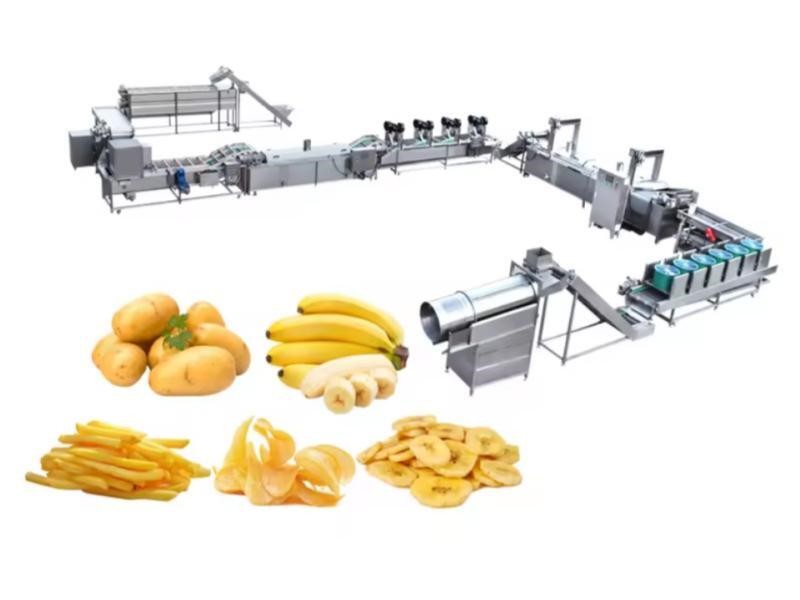
This is why we don’t sell cookie-cutter lines. Every line is purpose-built for your market:
- We engineer for local raw materials — Brazilian mandioca, Mexican plátano macho, Colombian yuca, and Peruvian Andean potatoes.
- We design for local regulations — ANVISA RDC 275:2002, NOM-251-SSA1-2009, INVIMA resolutions, and ANMAT food codes.
- We guarantee results — 100% first-inspection certification rate across all 12 projects.
Snack Production Line Projects by Country
Brazil — 4 Projects
Brazil is our most established market in Latin America, with 4 installations across São Paulo and Minas Gerais. The Brazilian snack market is dominated by players like Elma Chips, Yoki, Santa Helena, and Sensações, requiring world-class equipment to compete.
Key regulatory framework: ANVISA RDC 275:2002, ISO 22000, HACCP, and Kosher certification.
Local raw material expertise: Brazilian potato varieties (Asterix, Monalisa) and mandioca (cassava) require specific peeling and frying calibrations.
Our Brazil Portfolio:
- French Fries Production Line — São Paulo, 1,000 kg/h
Certifications: ANVISA, HACCP, Kosher
Key Results: Oil absorption 19.8%, energy consumption reduced by 13% - Fresh Potato Chips Line — São Paulo, 500 kg/h
Certifications: ANVISA, ISO 22000, Kosher
Key Results: Capacity stability ±2%, energy consumption reduced by 9% - Cassava Chips Manufacturing Plant — Minas Gerais, 1,200 kg/h
Certifications: ANVISA RDC 275:2002, Kosher
Key Results: Zero unplanned downtime, optimized energy consumption - Compound Potato Chips Line — São Paulo, 1,000 kg/h
Certifications: ANVISA, HACCP, Kosher-ready
Key Results: Oil absorption 22%, energy consumption reduced by 15%
Brazil-Specific FAQ:
- How does ANVISA RDC 275:2002 affect potato chips line design?
ANVISA requires specific material certifications, CIP (Clean-in-Place) systems, and documentation traceability. All our Brazil lines are pre-engineered to meet these requirements before shipping. - What Kosher certification pathways exist in Brazil?
We work with local Rabbinical authorities and global certification bodies to ensure equipment design meets Kosher standards from day one. - How do you engineer lines for Brazilian cassava (mandioca) varieties?
Brazilian mandioca has thicker skin and higher fiber content than Southeast Asian cassava. We recalibrate peeling modules and frying temperature curves accordingly.
Mexico — 4 Projects
Mexico is the second-largest snack market in Latin America at USD 6.7 billion, with fierce competition from Sabritas, Barcel, Bokados, Churrumais, and Totis. Our 4 Mexican installations span Monterrey, Mexico City, and Guadalajara.
Key regulatory framework: NOM-251-SSA1-2009, HACCP, Kosher.
Local raw material expertise:Japanica sweet potatoes, plátano macho (plantain), and nixtamalized corn for tortilla chips require specialized processing modules.
Our Mexico Portfolio:
- Sweet Potato Chips Line — Monterrey, 500 kg/h
Certifications: NOM-251, Kosher
Key Results: Full IoT traceability, energy consumption reduced by 14% - Fresh Potato Chips Line — Mexico City, 300 kg/h
Certifications: NOM, HACCP, Kosher
Key Results:99.2% capacity stability, certification achieved in 21 days - Tortilla & Compound Chips Line — Monterrey, 1,000 kg/h
Certifications: NOM-251, Kosher
Key Results: Natural gas consumption reduced by 11%, first-time Kosher certification passed - Plantain Chips Processing Line — Guadalajara, 500 kg/h
Certifications: NOM-251-SSA1, Kosher
Key Results: OPEX reduced by 12%, oil absorption 24%
Mexico-Specific FAQ:
- What is NOM-251-SSA1-2009 and how does it impact equipment design?
NOM-251 establishes food hygiene standards for equipment materials, surface finishes, and cleaning protocols. Our lines use 304/316 stainless steel and sanitary welding to comply. - How do you handle tortilla chip production from nixtamalized corn?
We integrate corn cooking systems, steeping tanks, and stone grinding or roller mills into the line design, ensuring authentic tortilla chip texture and taste. - What engineering adjustments are needed for plantain chip processing?
Plantain requires post-maturity control and curved slicing. We deploy curved slicing machines and temperature-controlled frying to handle plátano macho specifically.
Colombia — 2 Projects
Colombia’s snack market is valued at USD 1.2–1.8 billion (CAGR 7.1–7.2%), with strong local players like Yupi, Ramo, Super Ricas, and Frito Lay Colombia. Our 2 installations are in Medellín and Bogotá.
Key regulatory framework: INVIMA, CE, HACCP, Kosher.
Local raw material expertise: Colombian yuca (cassava) and Andean potato varieties require adapted blanching and frying protocols.
Our Colombia Portfolio:
- Yuca Chips Processing Line — Medellín, 1,000 kg/h
Certifications: INVIMA, Kosher, CE, HACCP
Key Results: Certification in 60 days, energy consumption reduced by 13% - Fresh Potato Chips Line — Bogotá, 200 kg/h
Certifications: INVIMA, Kosher
Key Results:±2% stability, operating cost 0.09 USD/kWh
Argentina — 1 Project
Argentina’s snack market reaches USD 1.3 billion (CAGR 5.4%), with competition from PepsiCo Argentina, Alicorp, and Arcor. Our Córdoba installation demonstrates our capability in the Southern Cone.
Key regulatory framework: ANMAT, Kosher.
Local raw material expertise:Diacol Capiro potato variety requires specific moisture and starch handling.
Our Argentina Portfolio:
- Compound Potato Chips Line — Córdoba, 500 kg/h
Certifications: ANMAT, Kosher
Key Results: Capacity deviation <<1.5%, oil absorption 27%
Peru — 1 Project
Peru’s snack market is valued at USD 1.1 billion (CAGR 6.3%), with key competitors including Frito Lay Peru, La Ibérica, and San Jorge. Our Lima installation serves the Andean market.
Key regulatory framework: INVIMA, HACCP, Kosher.
Local raw material expertise:Andean potato varieties (Yungay, Canchán) require gentle handling due to unique starch structures.
Our Peru Portfolio:
- Fresh Potato Chips Line — Lima, 500 kg/h
Certifications: INVIMA, HACCP, Kosher
Key Results:99% capacity stability, after-sales response <<12 hours
Snack Production Line Capabilities by Product Category
Different snack categories demand different engineering approaches. Here’s how our lines handle the full spectrum:
| Product Type | Countries | Capacity Range | Key Process Challenges | Dedicated Equipment | Oil Absorption Standard |
|---|---|---|---|---|---|
| Fresh Potato Chips | Brazil, Mexico, Colombia, Peru | 200–1,000 kg/h | Slicing uniformity, browning control | Multi-blade slicer, vortex washer | 22–28% |
| French Fries | Brazil | 1,000 kg/h | Cutting precision, pre-fry temperature curve | Crinkle cutter, pre-fry temperature control | 19.8% |
| Compound Potato Chips | Brazil, Argentina | 500–1,000 kg/h | Dough moisture, rolling thickness | Extruder, calendering rollers | 22–27% |
| Cassava / Yuca Chips | Brazil, Colombia | 1,000–1,200 kg/h | Cyanide processing, humidity adaptation | Dedicated peeler, VFD temperature-controlled fryer | 28–30% |
| Чипсы из батата | Mexico | 500 kg/h | Sugar caramelization, IoT monitoring | Smart temperature control, heat recovery | <<25% |
| Tortilla Chips | Mexico | 1,000 kg/h | Nixtamalizado process, thickness | Corn cooking system, counter-roller pressing | <<26% |
| Plantain Chips | Mexico | 500 kg/h | Post-maturity control, curved slicing | Curved slicer, temperature-controlled fryer | 24% |
Latin American Food Safety Certification Guide for Snack Production Lines
Brazil — ANVISA Compliance
ANVISA RDC 275:2002 sets the baseline for food equipment safety in Brazil. All our Brazilian projects are pre-engineered to meet ANVISA material requirements, CIP system standards, and documentation traceability. We have 100% first-time pass rate on ANVISA inspections and maintain partnerships with local certification bodies to streamline the process.
Mexico — NOM Compliance
NOM-251-SSA1-2009 governs food hygiene standards for equipment in Mexico. Our 4 Mexican projects achieved certification in 21 to 60 days, thanks to pre-compliance design using sanitary-grade stainless steel and full welding documentation.
Colombia & Peru — INVIMA Compliance
INVIMA regulates food, cosmetics, and pharmaceuticals in Colombia and Peru. Combined with CE marking for mechanical safety, our lines meet dual compliance requirements. Average certification time: 60 days.
Argentina — ANMAT Compliance
ANMAT enforces the Argentine Food Code on imported equipment. Our Córdoba project passed inspection with zero non-conformities on the first attempt.
Kosher Certification Across Latin America
All 12 projects achieved Kosher certification. We design equipment with CIP-ready architecture, food-safe materials, and cleanable surfaces that satisfy Kosher requirements across Brazil’s, Mexico’s, Colombia’s, Peru’s, and Argentina’s Jewish communities.
Field Engineering Insights from 12 Latin American Installations
“When commissioning the 1,200 kg/h cassava line in Minas Gerais, we had to recalibrate the peeling module for local mandioca varieties, which have thicker skin and higher fiber content than Southeast Asian cassava. The VFD-integrated frying system allowed us to compensate for seasonal humidity swings between 45% and 85%.”
— ASM-JK, Lead Engineer, October 2023
“The IoT-enabled sweet potato line in Monterrey required custom heat recovery tuning because Innovator sweet potatoes have 18–22% sugar content versus 4–6% in regular potatoes. We implemented a two-stage frying profile to prevent Maillard browning while maintaining the <25% oil absorption target.”
— ASM Engineer, March 2024
“For the Medellín yuca project, the key challenge was adapting the line to process both bitter and sweet yuca varieties with different cyanogenic glucoside levels. We integrated a modified blanching protocol at 92°C for 8 minutes.”
— ASM Engineer, July 2023
Investment & ROI Benchmarks from Real Latin American Projects
| Metric | Brazil (Average) | Mexico (Average) | Colombia (Average) | Argentina | Peru |
|---|---|---|---|---|---|
| Average Equipment Investment | $680K | $510K | $445K | $520K | $495K |
| Average Installation + Logistics | $55K | $42K | $48K | $38K | $40K |
| Energy Reduction | -12% | -12% | -13% | -11% | -12% |
| Gross Margin | 48–52% | 50–54% | 47–50% | 49–52% | 50–53% |
| Payback Period | 14–18 months | 13–16 months | 15–17 months | 14–16 months | 13–15 months |
What Latin American Clients Say
“The commissioning team’s attention to ANVISA compliance and rapid response to technical queries made this a seamless project. We passed our first inspection with zero non-conformities.”
— Production Manager, São Paulo, Brazil
“Our operators adapted quickly to the smart control system. We consistently achieve under 25% oil content, which our customers love.”
— Fernando, Plant Manager, Monterrey, Mexico
“After-sales response under 12 hours — that’s faster than most local suppliers.”
— Operations Director, Lima, Peru
Latin America Snack Production Line FAQ
ANVISA RDC 275:2002, HACCP, ISO 22000, and Kosher are the most common. Our lines are pre-engineered to meet all four.
Based on our 4 Mexican projects, certification takes 21 to 60 days when equipment is pre-compliant.
INVIMA (Colombia/Peru) focuses on food safety and sanitary registration, while ANMAT (Argentina) follows the Argentine Food Code with strict material and welding standards.
Yes. With modular design and quick-change tooling, our lines can switch between cassava/yuca and potato with minimal downtime.
13 to 18 months, depending on the country and product category.
Yes. All manuals, SOPs, and training materials are available in Spanish, Portuguese, and English.
We maintain regional spare parts hubs and offer air freight contracts to ensure critical parts arrive within 48–72 hours.
Our equipment design meets OU Kosher, OK Kosher, and local Rabbinical standards across all 5 countries.
Absolutely. We have dedicated plantain chip lines in operation and can adapt slicing and frying modules for banana as well.
We guarantee technical response within 24 hours, with <<12 hours achieved in Peru and most Brazilian projects.
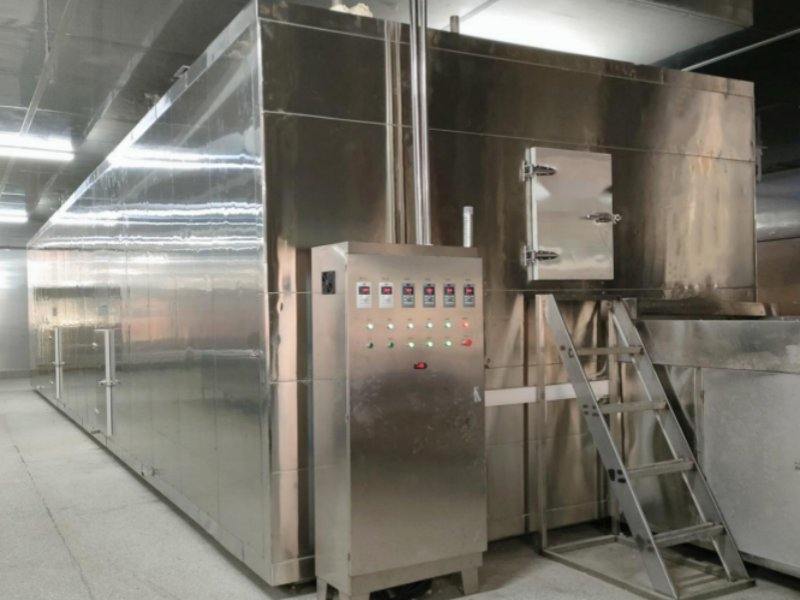
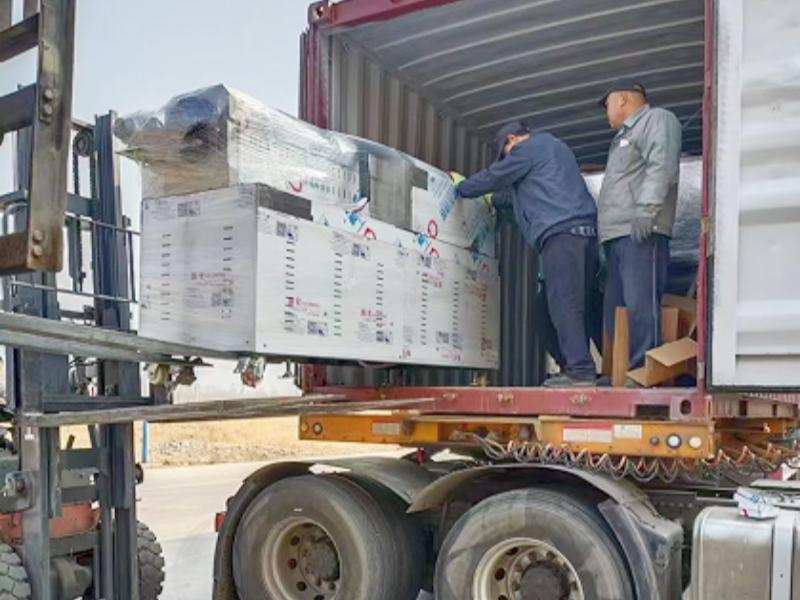
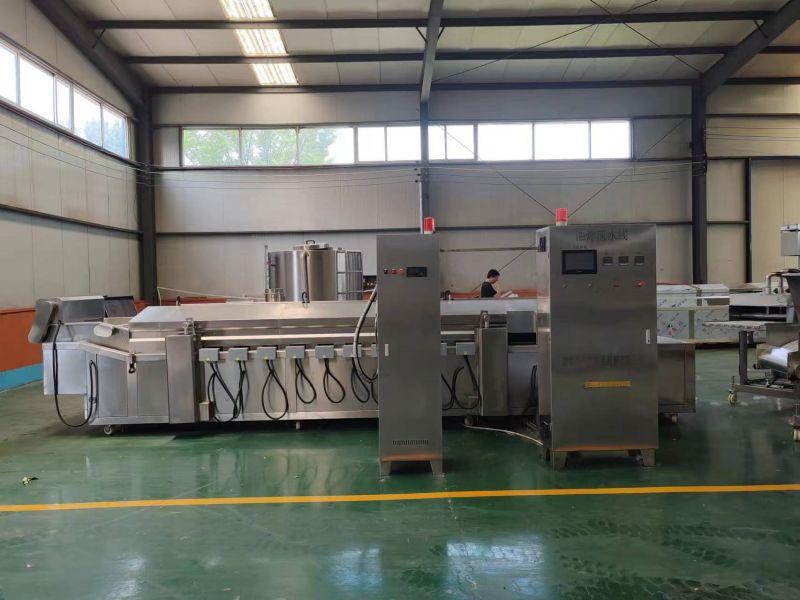
Potato Chips Production Line in Latin America
Quick Navigation: All 12 Latin America Case Studies
| Country | City | Product | Емкость | Link |
|---|---|---|---|---|
| Brazil | São Paulo | French Fries | 1,000 kg/h | Read Full Case Study |
| Brazil | São Paulo | Fresh Potato Chips | 500 kg/h | Read Full Case Study |
| Brazil | Minas Gerais | Чипсы из маниоки | 1,200 kg/h | Read Full Case Study |
| Brazil | São Paulo | Compound Potato Chips | 1,000 kg/h | Read Full Case Study |
| Mexico | Monterrey | Чипсы из батата | 500 kg/h | Read Full Case Study |
| Mexico | Mexico City | Fresh Potato Chips | 300 kg/h | Read Full Case Study |
| Mexico | Monterrey | Tortilla & Compound Chips | 1,000 kg/h | Read Full Case Study |
| Mexico | Guadalajara | Plantain Chips | 500 kg/h | Read Full Case Study |
| Colombia | Medellín | Yuca Chips | 1,000 kg/h | Read Full Case Study |
| Colombia | Bogotá | Fresh Potato Chips | 200 kg/h | Read Full Case Study |
| Argentina | Córdoba | Compound Potato Chips | 500 kg/h | Read Full Case Study |
| Peru | Lima | Fresh Potato Chips | 500 kg/h | Read Full Case Study |
Planning Your Next Savory Snack Project in Europe?
Whether you are expanding a high-capacity 2,000 kg/h fresh potato plant in Western Europe or launching an automated fabricated crisp line to capture market share, do not leave your engineering to chance. Reduce your compliance risks, slash your utility overhead, and achieve reliable, continuous output with an experienced engineering partner.
Contact our industrial project group today to receive a comprehensive technical proposal, customized factory layout drawings, and an accurate financial quote tailored to your regional metrics.
 Russian
  English
  Spanish
  French
  Arabic
  Portuguese
  German
  Italian
  Indonesian
  Malay
Malay  Uzbek
Uzbek